A weekly program weaving together wilderness skills, ecological awareness, and liberatory educational practices
For ages 8–11
Mondays, 9:00 am–3:00 pm
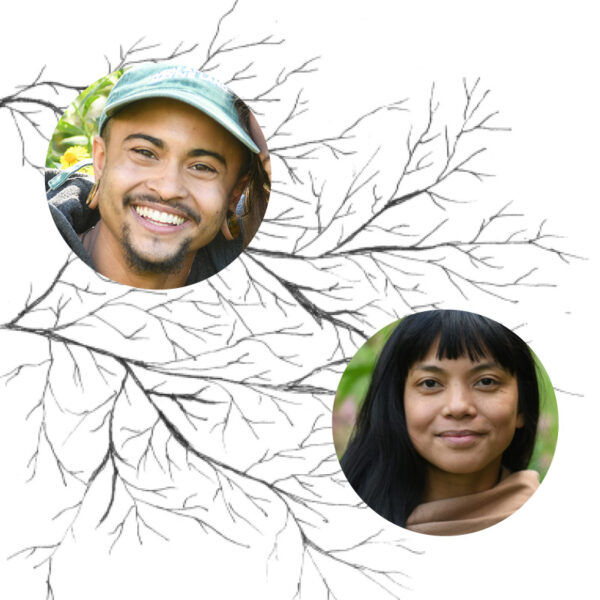
Directed and led by Raei Bridges and Pavina Soukamneuth
Location: 122 Daley Rd., East Chatham, NY. Get directions.
Fall Session 2026: Sept. 21–Dec. 14
Winter Session 2027: Jan. 18–Feb. 8
Spring Session 2027: March 8–May 24
Tuition for 2026–2027 Program:
Fall Session Only: $940
Full Year (Fall/Winter/Spring): $2,140
Payment plan, financial assistance and full scholarships available.
What can mycelial networks teach us about connection, resilience, and community? How might wilderness education help young people develop the skills and awareness needed to contribute to a more caring, equitable, and interconnected world?
Mycelium is a weekly outdoor education program that weaves together wilderness skills, ecological awareness, and liberatory educational practices to support young people in deepening their relationship with the natural world, their communities, and themselves.
Through hands-on learning, mentorship, adventure, and guided reflection, participants build practical outdoor skills while exploring themes of stewardship, belonging, mutual care, and social responsibility. Like the underground networks of mycelium that support and nourish entire ecosystems, this program helps young people strengthen the skills and sense of purpose that allow them to contribute to a better world.
Mycelium: a web of tiny, thread-like fibers that grow underground or inside wood, breaking down dead material and helping plants share nutrients
Education as a pathway for cultivating critical consciousness
While all Flying Deer programs teach wilderness skills and foster a deep connection to the natural world, Mycelium uses wilderness education as a pathway for cultivating critical consciousness, community responsibility, and collective action in response to the climate, social, and economic challenges of our time.
Rooted in liberatory educational practices — the word “liberators” means tending, serving, or attempting to set free — Mycelium invites youth to explore the interconnectedness of ecological and human systems, connect with the wisdom of land-based traditions and ancestral lineages, and develop the skills needed to participate meaningfully in their communities.
Skill-building and collaborative learning
The program supports young people to develop their unique gifts and roles as caretakers, leaders, and changemakers in an increasingly interconnected world. Students will be guided through a variety of skills and learning pathways, including:
- Shelter building and an exploration of traditional ecological knowledge and land-based practices developed by Indigenous peoples from our own lineages
- Risk assessment, responsibility, and self-regulation through the safe use of knives, hatchets, and other wilderness tools
- Firecraft and friction fire, alongside discussions about the cultural, historical, and communal significance of fire across different regions
- Outdoor cooking techniques and food preparation methods that support sustainability and longevity of resources
- Crafting practical items from natural materials, fostering creativity, resourcefulness, and an understanding of alternatives to consumer-driven culture
- Naturalist studies, including foraging local plants, wildlife tracking, and ethnobotany as pathways to place-based learning and a deeper sense of belonging and agency
- Games, challenges, and wilderness adventures designed to build confidence, teamwork, problem-solving abilities, and social-emotional skills
- Group discussions and collaborative activities that encourage young people to think critically about community, justice, collective responsibility, and the ways they can contribute to positive change
Important Registration Information
Please note: All applicants will be waitlisted upon registering, and will be informed of their acceptance by August 21. No payment is required to apply.
Applications will be approved by the program director and administrative team prior to enrollment, with priority given to BIPOC, LGBTQIA+, and gender-nonconforming youth and families.